Back in 2021, a realtor friend of mine was staring at a $2,400 invoice for physical staging. It was a vacant condo, and the owner was already bleeding money on mortgage payments. I told him to hold off, spent my weekend mastering a few platforms, and we saved him $2,200. Since then, I’ve logged over 200 hours testing a dozen different virtual staging software tools, shipping listing sets under 48-hour deadlines, and learning exactly which rooms break the AI and which ones sell properties.

If you are a realtor, you’ve likely heard the term thrown around, but there is a massive gap between "good" virtual staging and the kind that looks like a bad video game from 2005. Let’s break down exactly what this tech is and how you can use it to win more listings without burning your budget.
What is Virtual Staging Software?
Virtual staging software is a digital solution that allows agents and photographers to take photos of empty, outdated, or cluttered rooms and populate them with high-definition, 3D-rendered furniture. Using a mix of AI-driven automation and professional digital artistry, the software maps the perspective of the room and "places" couches, rugs, tables, and decor into the space so that the final image looks as if a professional designer walked in with a moving truck.
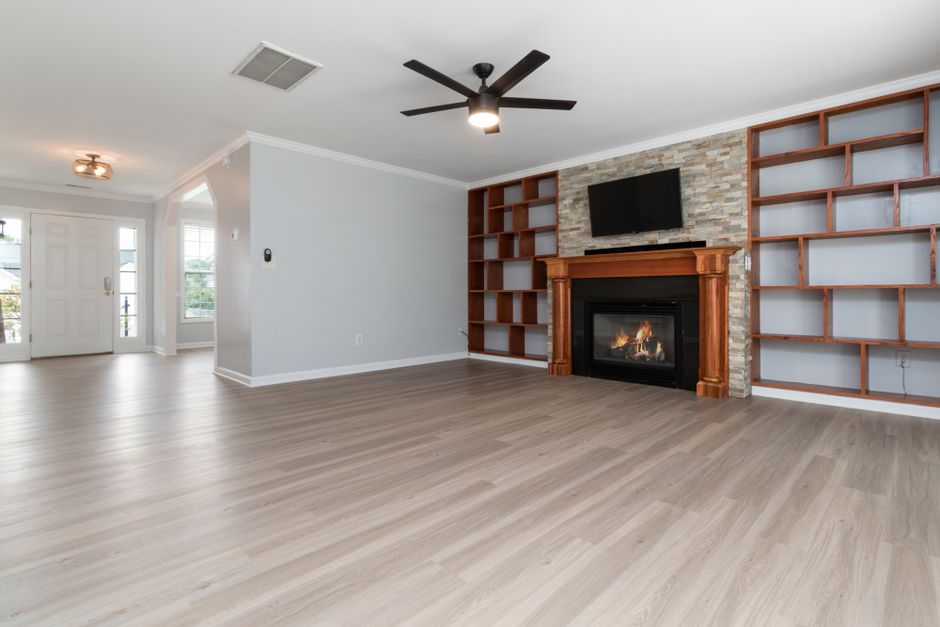
But before we get into the "how," I have to ask: Did you reshoot the photo first? Because no amount of AI-powered software can fix a blurry, dark, or poorly composed shot. If the foundation is bad, the virtual staging will look like a sticker slapped onto a low-res image.
AI Virtual Staging vs. Physical Staging Costs
The primary driver for virtual staging https://dlf-ne.org/what-technical-skills-do-i-need-to-start-virtual-staging-in-30-minutes/ is, undeniably, the budget. Physical staging is a logistical nightmare. You have to hire a company, pay for the furniture rental, pay for the delivery team, and then pay for the pickup. Then, if the home doesn't sell in 30 days, you’re on the hook for another month of rental fees.
Virtual staging is essentially a one-time digital production cost. Here is how the numbers generally break down for a standard listing:
Feature Physical Staging Virtual Staging Average Cost $2,000 – $5,000+ $30 – $150 per image Lead Time 1 – 2 weeks 24 – 48 hours Flexibility Low (Set it and forget it) High (Change the style in a click)When you look at a provider like BoxBrownie, you are typically looking at a range of $32–48 per staged image. Even for a full set of 10-12 photos, you are spending less than $500. That’s a massive ROI for a listing that needs a visual "hook" to stop the scroll on Zillow.
How Virtual Staging Works: The Workflow
The process is designed for speed—because in this industry, we count everything in time. 48 hours is a lifetime in a competitive market.
The Shot: You upload a high-resolution, wide-angle photo of a clean, empty room. Avoid shooting from the hip or weird, low angles that distort the floor space. The Selection: You choose a design style (Scandinavian, Modern, Industrial, etc.) via the software’s catalog. The Processing: The software or the remote design team analyzes the perspective, light sources, and floor planes. The Revision: You review the proofs. This is where most people get tripped up. Check the scale. Is that coffee table the size of a Toyota? If it is, send it back for a revision. The Delivery: You receive your final files ready for the MLS.The "Room That Breaks AI" List
In my 200+ hours of testing, I’ve kept a running list of "rooms that break AI." If your listing has these, virtual staging becomes exponentially harder:
- Dark Rooms: If there is no natural light, the AI struggles to "ground" the furniture. The shadows look like floating blobs. Narrow Kitchens: It is nearly impossible to stage a tiny galley kitchen without making it look like a dollhouse. Awkward Angles: Wide-angle lenses that distort the corners of the room make the furniture look warped. If you don't reshoot with a proper level camera, the AI will fight the perspective forever.
Photo Realism: Avoiding the "Fake" Look
The biggest turn-off for buyers is "Fake-looking furniture." You want to avoid companies that use pre-made 2D "stamps" of furniture. Look for software that manages the three pillars of realism:
- Shadows: If the windows are on the left, the shadows must fall to the right. If the shadow is uniform under the whole chair, it’s a fake. Scale: If a sofa takes up 80% of the room, you’ve failed. The goal is to show the *potential* of the space, not to hide the room's actual footprint. Lighting: The furniture's color temperature must match the room's natural light. If the room is cool and blue-toned, you can't drop in bright, sun-drenched furniture.
MLS Workflow and Disclosure Rules
We need to talk about ethics. I get annoyed when agents try to pass off virtual staging as a "furnished home" without any disclosure. It is misleading to the buyer and can lead to legal headaches.
Always follow these rules:
- Label your photos: Use a watermark or a caption that clearly states "Virtually Staged." Include the "Before": It is best practice to include the original empty room photo alongside the staged version in your MLS listing. Check your local board: Some MLS boards have very specific rules about how staged images are displayed. Ignoring these isn't just unprofessional; it’s a violation of your fiduciary duty.
Final Thoughts: Is It Worth the Time?
Virtual staging is the https://smoothdecorator.com/will-virtual-staging-help-my-zillow-listing-get-more-clicks/ ultimate tool for the modern realtor, provided you respect the process. It saves thousands of dollars, allows you to stage a home in a 48-hour window, and helps buyers visualize their future home. But it isn't magic. It requires high-quality source photography and a keen eye for detail.
If you’re going to do it, do it right. Take the extra 30 seconds to level your camera, check your lighting, and always, always disclose. Your reputation—and your listing—depend on it.